
Cat Memorial Poems: Original Words to Remember Your Cat
Read original cat memorial poems in different lengths and tones, with gentle personalization prompts and ideas for a private reading, album or keepsake.
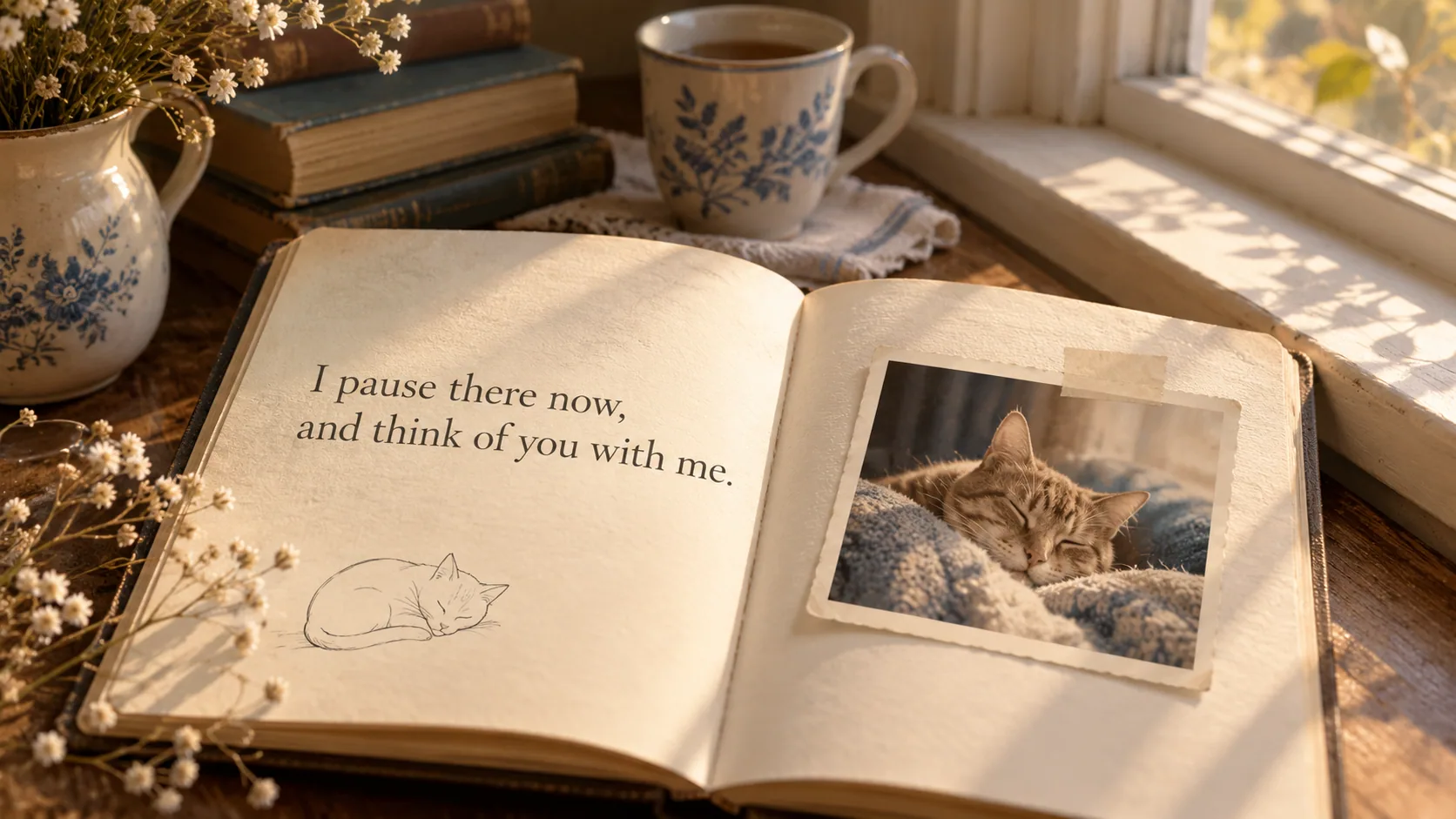
Table of Contents
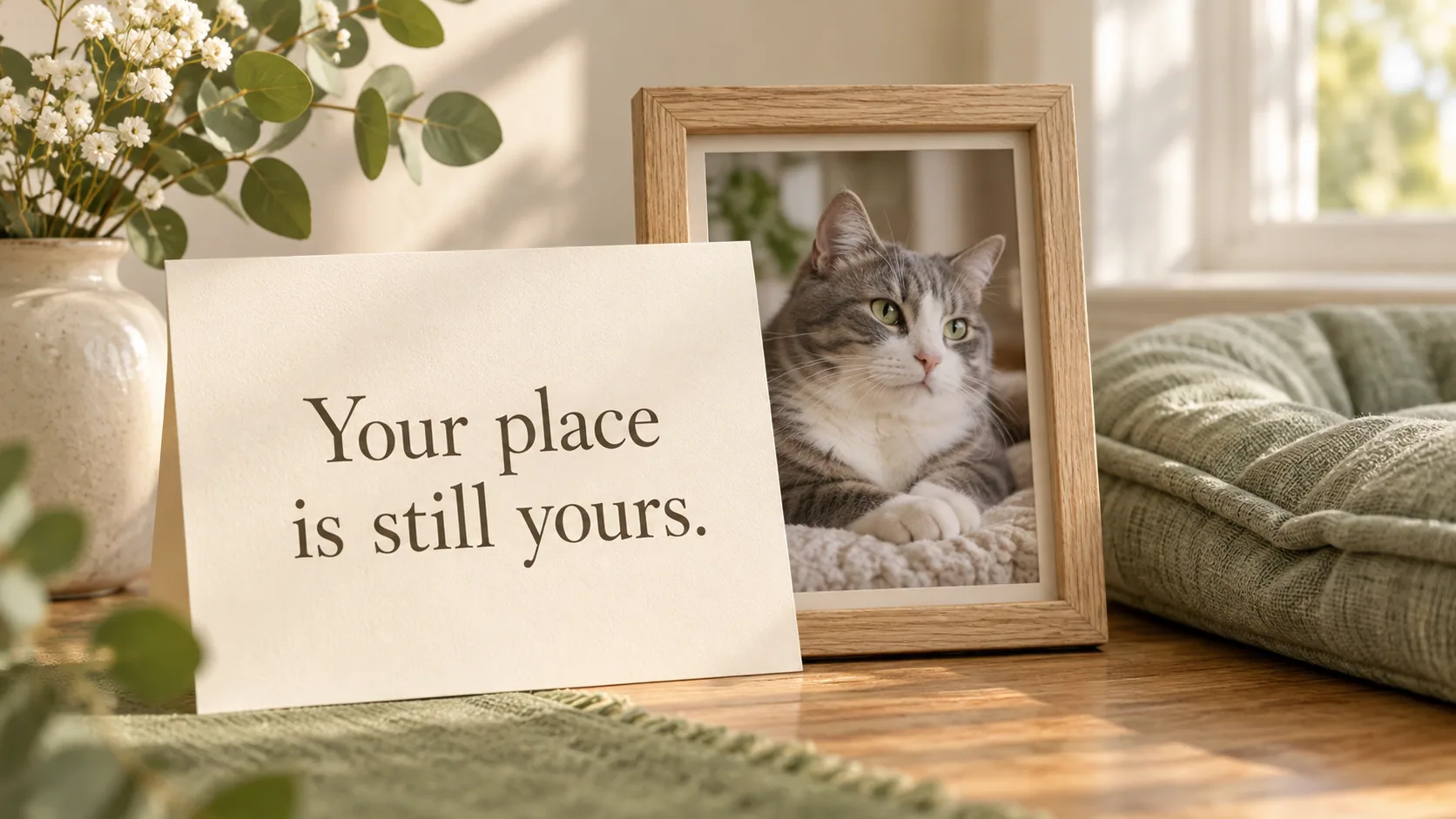
A cat memorial poem does not need to explain a whole relationship. A few lines about a familiar place or habit can hold one memory without telling you how grief should feel.
The four poems here are original Frameow writing. You may use and adapt them in personal cards, memorial displays and keepsakes without attribution. They are not quotations from another poet, and they do not promise to make loss easier.
Download the four poems as plain text to preserve the line breaks while making your own personal copy.
For the shortest block on a card, begin with The Window: four lines. For shorter individual lines, choose For Your Name, which has six. The other two are six-line poems for a memory album or reading. None is Rainbow Bridge, a traditional prayer or a quotation from a named poet; choose these when you want original, nonreligious wording.
The Window
You knew the hour of every patch of light.
We learned to leave your favorite corner free.
The window fills with morning as it did;
I pause there now, and think of you with me.
This poem suits a photograph of a cat near a window. If that was not your cat's habit, choose a different poem instead of forcing the image to fit.
The Small Things
Not only in the photographs,
not only when we say your name,
but in the pause beside the chair,
the way we leave a little space,
you stay among the small things
that made this house our place.
Use this when you want words about everyday life rather than an afterlife or a farewell. It can sit beside several ordinary photographs in an album.
A Place Beside Me
I need no perfect words today,
no tidy ending to our days.
I keep the stories as they come:
your lifted paw, your searching gaze.
The love was real in little things.
It still belongs here, where it stays.
This longer option leaves room for an unfinished feeling. It can be read aloud, but there is no requirement to share it publicly.
For Your Name
Your name,
a small sound,
held a whole familiar world.
I say it softly
and remember
who came when I called.
This is the shortest option by line length and works beside a name or a close-up photograph. If your cat famously ignored calls, you might prefer to change the last line to “who listened from the chair.”
Choose the poem by the space and the person
| Use | Try | Why |
|---|---|---|
| Small printed insert | The Window | Four lines make a compact block |
| Memory album | The Small Things | Pairs with ordinary scenes |
| Private writing or a reading | A Place Beside Me | Makes room for an unresolved feeling |
| Minimal photograph display | For Your Name | Short lines leave visual space |
For someone else's loss, ask whether they want a poem before turning it into a permanent gift. A plain note and an offer to listen may be more welcome than wording chosen on their behalf.
Choose a poem for reading aloud
Read the candidate slowly once before choosing it for a gathering. Mark a pause where you naturally need one and check whether you are comfortable saying the last line. A shorter poem followed by one specific memory can be easier to deliver than a longer reading.
You can introduce it simply: “These words made me think of the way she waited at the window.” There is no need to present the poem as a message from the cat or as proof of an afterlife. For a recipient whose beliefs you do not know, a familiar place, sound or routine keeps the reading personal without assuming agreement.
The poems on this page are original Frameow text. Keep that attribution distinct from any personal lines you add; do not relabel them as a famous poem or anonymous traditional verse.
Add one memory without rewriting everything
Suppose the cat waited on a green chair rather than at a window. The opening of The Window could become: “You knew the quiet comfort of that chair.” Read the whole poem aloud afterward; an accurate detail matters more than preserving a rhyme at any cost.
Keep a copy of the unedited poem and a separate copy of your adaptation. That makes it easy to return to the original if the changes become too crowded.
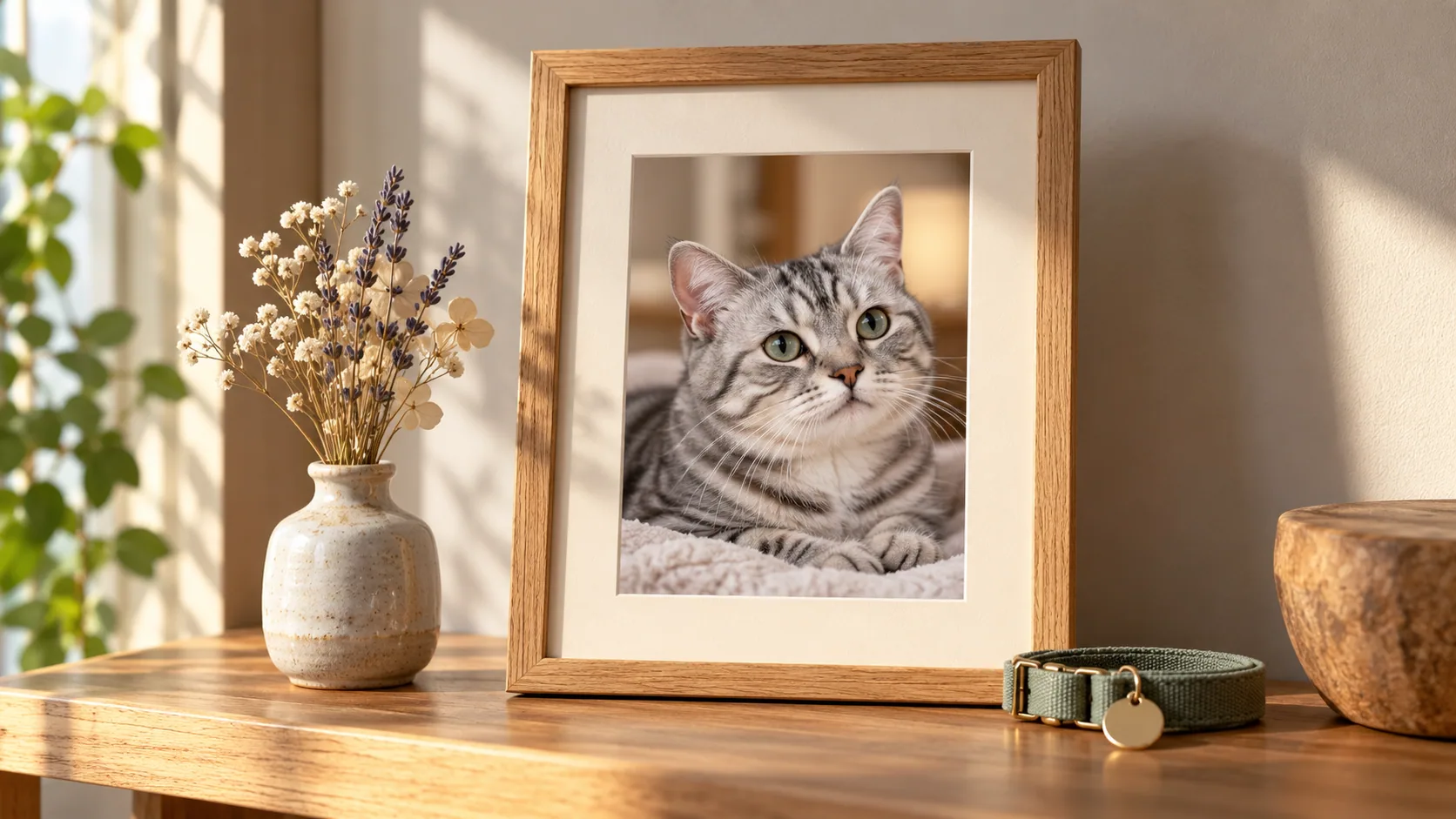
Put the words beside an image
Use the memory-card editor for a photograph and text, or place the poem beside a separate portrait. The editor accepts up to 500 characters in its story field, but that is an input limit rather than a guarantee that every layout fits. Paste one poem with its line breaks, use a short heading and check the overflow warning and print preview. If it feels cramped, keep the poem on a separate page rather than shrinking it until it is difficult to read. Edits disappear on reload, so keep the text file and save a PDF before leaving. Check line breaks at the final display size. Do not squeeze a poem across the cat's face simply because a layout has no other space.
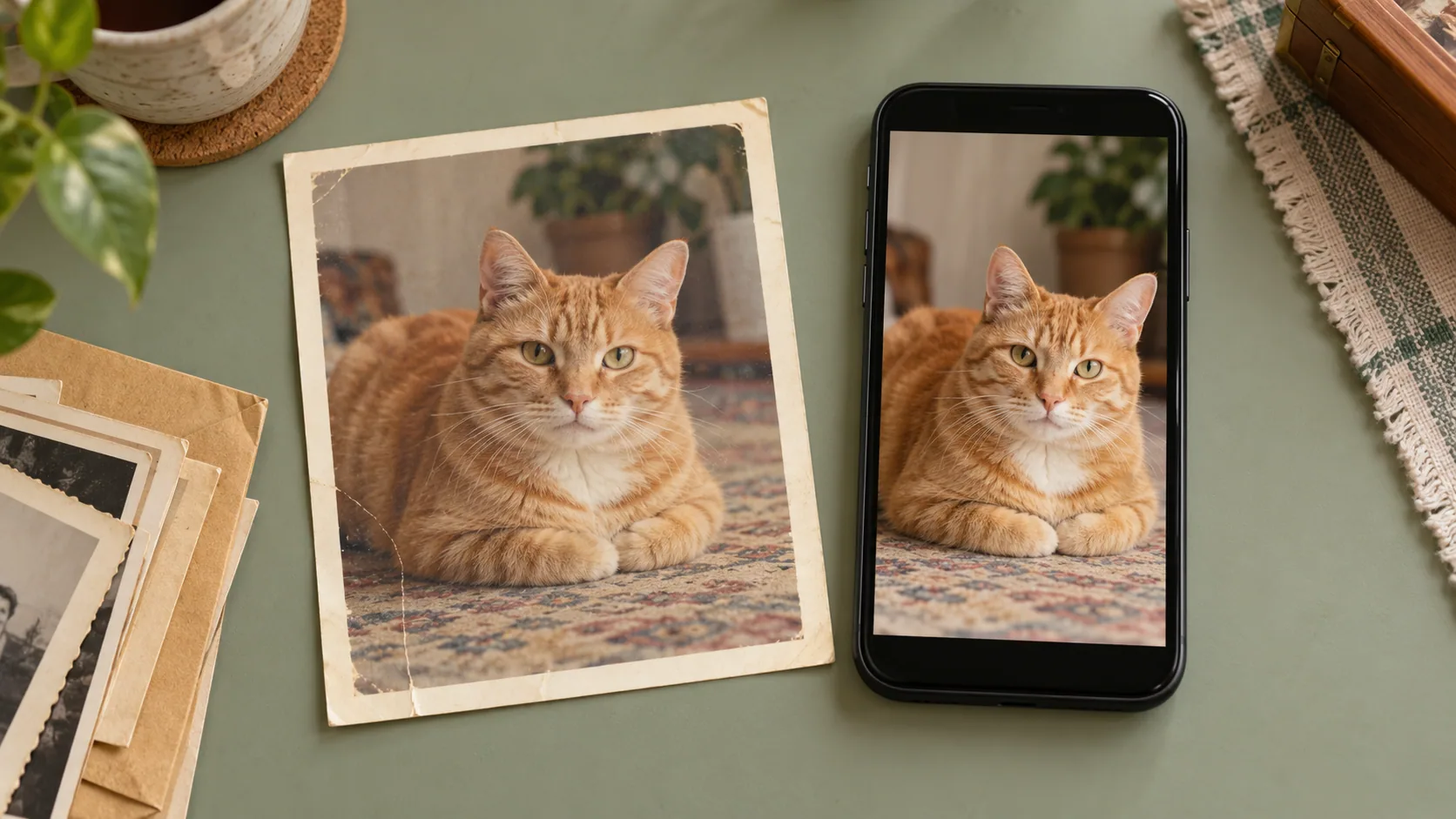
A lifetime photograph and an optional digital memorial portrait have different roles: one records the cat as photographed, while the other is an artistic interpretation. The words can accompany either. Printing, framing and engraved products are separate choices.
Cat portrait tutorials, creative gift ideas, and new styles from the Frameow team.