
Cat Portrait Styles: How to Choose the Right Look
Compare cat portrait styles by detail, color, mood and display size. Use visual examples to choose a look that keeps your cat recognizable.
Table of Contents
- Start with personality, then look at the artwork
- Royal portraits: a little theater
- Minimalist portraits: room for the face
- Watercolor-inspired portraits: a softer edge
- Think about the destination
- Make your first choice small
- Compare the newer visual directions by their job
- Review both the complete image and a small crop
- Decide what “minimal” should preserve
The best starting point is a detail you would recognize anywhere: the shape of their ears, an uneven white patch, or the way they look at you. Choose a portrait style around that detail, then consider the mood and where you want to enjoy it.
Frameow makes AI-generated digital portraits. The collection’s room scenes are display mockups, and the painted or drawn textures are part of the digital image. Prints and frames are not included.
Start with personality, then look at the artwork
A regal costume can be a lovely joke about a cat who already owns the sofa. A quiet drawing can suit a watchful face. These are starting points, not rules about which breeds belong in which styles.
Open a style and compare its source image with the result. Look at the eyes, muzzle, ears, and coat pattern before judging the background. If you want a restrained portrait, check that the decorative elements leave the face enough space. If you enjoy theatrical art, see whether the costume and lighting add to the expression you like.
Royal portraits: a little theater
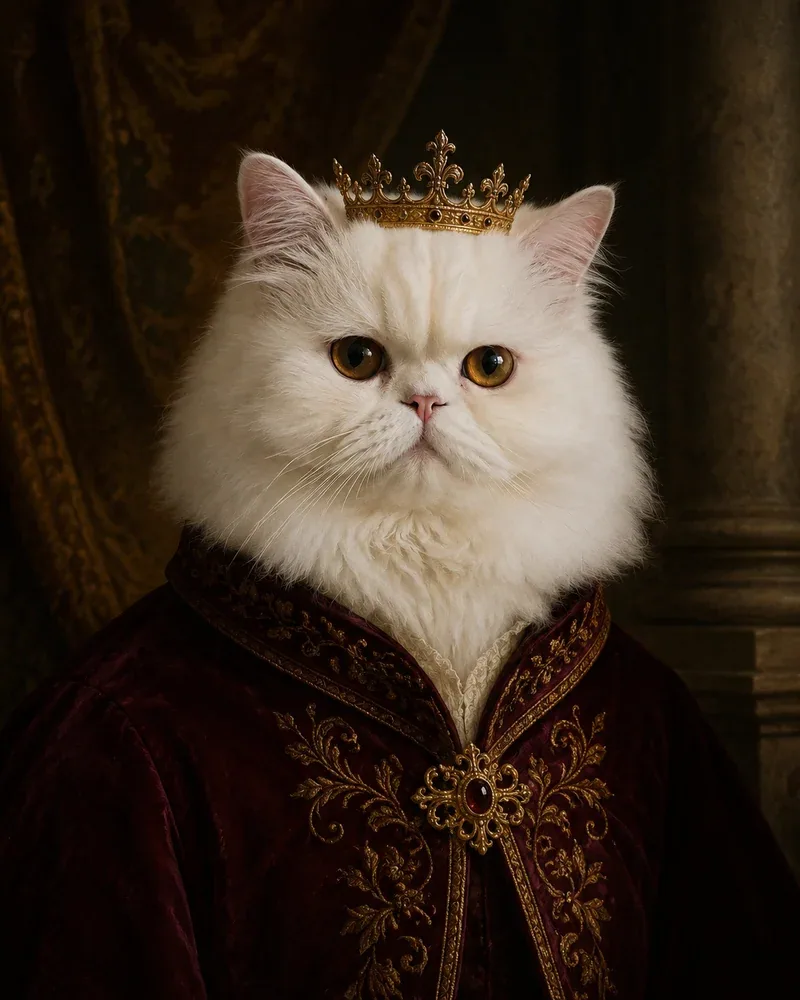
A royal portrait gives a familiar face a formal pose and richly painted setting. It is a playful choice for a digital gift, or for a room with dark wood and collected objects. The costume becomes part of the story, so choose this because you enjoy the transformation rather than because you want a faithful copy of the photograph.
In the example, notice how much visual space belongs to clothing and background. Ask whether that balance suits your cat’s expression and the kind of portrait you have in mind.
Explore the Royal Renaissance style.
Minimalist portraits: room for the face
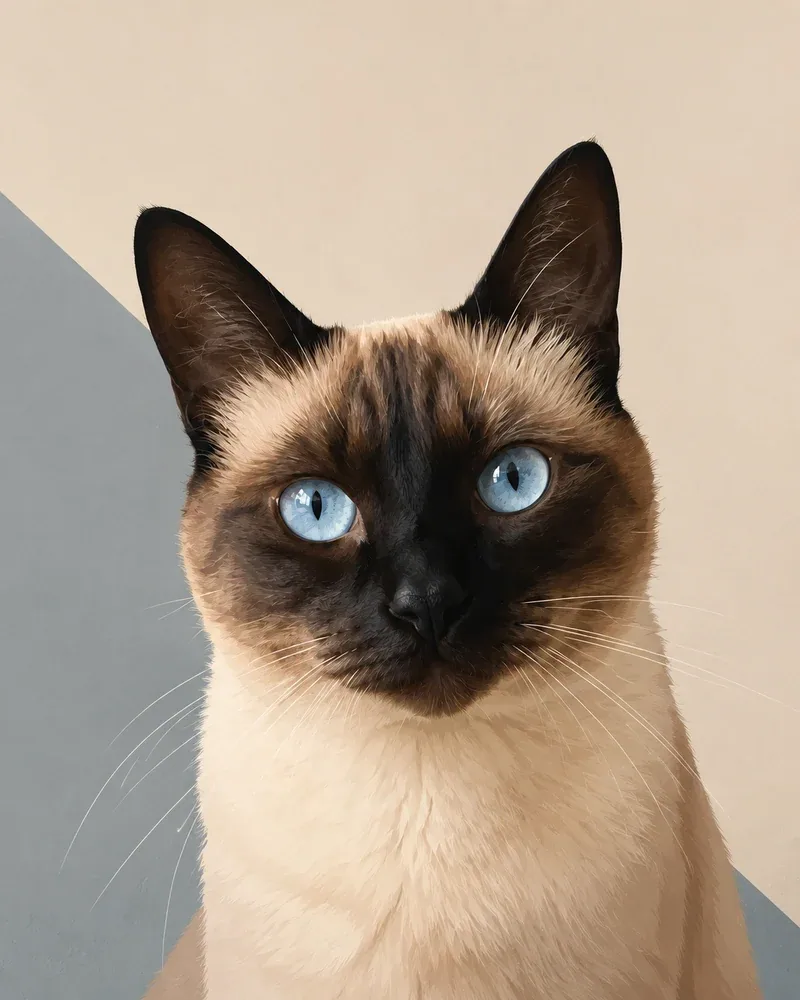
A simpler composition gives you fewer competing details. This can work well beside family photographs or in a room that already has plenty of color. It also makes changes to the face easier to notice, so compare the markings and proportions carefully when you review your own result.
A calm palette is a visual preference, not a promise of better AI likeness. Your source photo and the model’s interpretation still matter.
Explore the Modern Minimalist style.
Watercolor-inspired portraits: a softer edge
Watercolor-inspired styles use translucent-looking color and soft boundaries. They can suggest fur and atmosphere without describing every strand. Compare the gentler Watercolor Storybook portrait with the more expressive Watercolor Splatter portrait: sharing a medium does not mean sharing a mood.
Look at whether the face remains distinct inside the washes. If an exact coat marking matters to you, keep it in mind when choosing your source photo and evaluating the generated image.
Think about the destination
For a digital gift, think about the recipient’s taste before your own. Use a photograph you have permission to upload, and review the result before sending it. A portrait is personal even without an elaborate background or a special occasion.
For a future print, first choose the image proportions and the space where it might go. A room mockup helps you imagine the mood; it does not certify a print size. Check the downloaded file’s actual pixel dimensions with your printer before paying for a print or frame.
For a keepsake, there is no required visual language. A simple portrait can feel just as meaningful as a dedicated memorial style.
Make your first choice small
Pick one style that you would enjoy keeping. Use a clear source photo, check the credit cost, and review the generated result. A new generation uses credits again, and AI may change details between results.
All current Frameow plans include watermark-free downloads. Start with the portrait collection, or read how to choose your source photo before creating.
Compare the newer visual directions by their job
The collection also includes ink, paper, anime, game-inspired and art-history-inspired directions. Choose among them by what you want to do with the image, then examine the actual style's examples and creator controls.
| Direction | Useful comparison | Detail to check first |
|---|---|---|
| Fine line, charcoal or colored pencil | How much the face depends on line and tonal marks | Ear outline and distinctive facial patches |
| Ink wash or gongbi-inspired | Loose ink effects versus a more outlined decorative composition | Whether the markings stay readable |
| Paper cut or collage-inspired | Large shapes, overlaps and a graphic silhouette | Separation between ears, body and background |
| Anime or manga-inspired | An expressive fictional character | Which features are transformed rather than preserved |
| Pixel or voxel-inspired | A compact, deliberately simplified character | Whether the face reads at a small display size |
| Wanted poster or fantasy card | A playful visual keepsake | Text accuracy and whether external layout work is needed |
| Famous-art-inspired | A recognizable reference to a historical composition | Clear distinction between modern adaptation and the original work |
| Mascot avatar | A simple social image | Circle crop and readable expression |
A style resembling a game does not promise a game-ready model, texture or importable avatar. A card-like image does not automatically supply editable text or print bleed. Check what the page actually delivers before choosing it for a project.
Review both the complete image and a small crop
Look at the image as a whole, then at a small square or circle representing an avatar. In the smaller view, check that the eyes and outline remain visible. Decorative costumes, flowers and buildings can be enjoyable in a full picture while distracting at profile size.
When comparing several generated styles, remember that pose, lighting and facial interpretation can all change. Judge each result against the reference photo instead of assuming that a change in likeness comes only from the named style. The useful comparison is the complete result you would actually keep.
Decide what “minimal” should preserve
Minimal can mean fewer colors, fewer lines or more empty background. Decide which simplification you want before judging examples. A one-line outline may preserve the pose while losing a distinctive face patch; a quiet painted portrait can retain that patch while simplifying the room around it.
Write down two features you would miss if they disappeared. Then compare those features at the size where you will use the image. This is a selection checklist, not a controlled comparison of three minimalist outputs from the same photo.
Cat portrait tutorials, creative gift ideas, and new styles from the Frameow team.