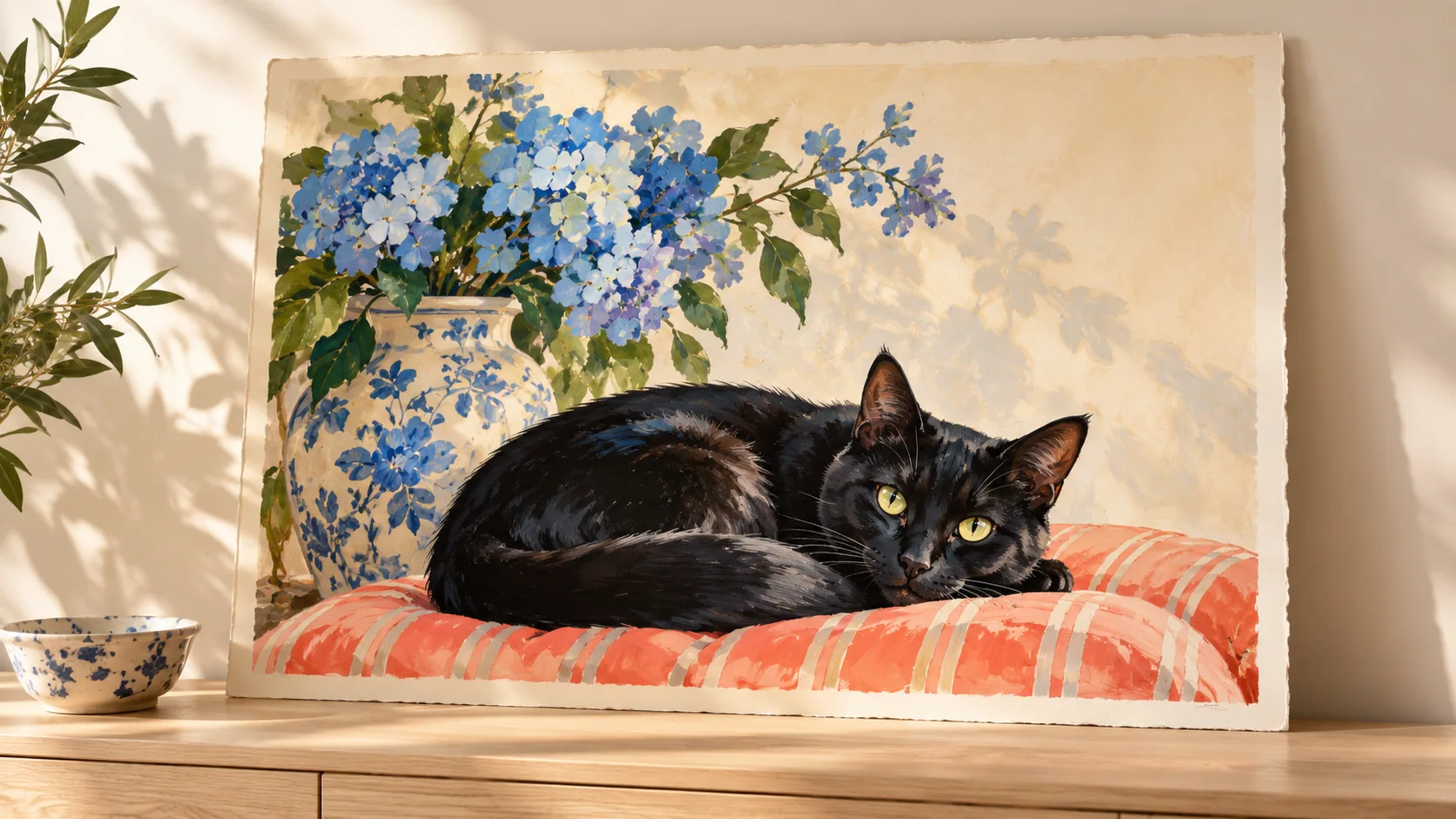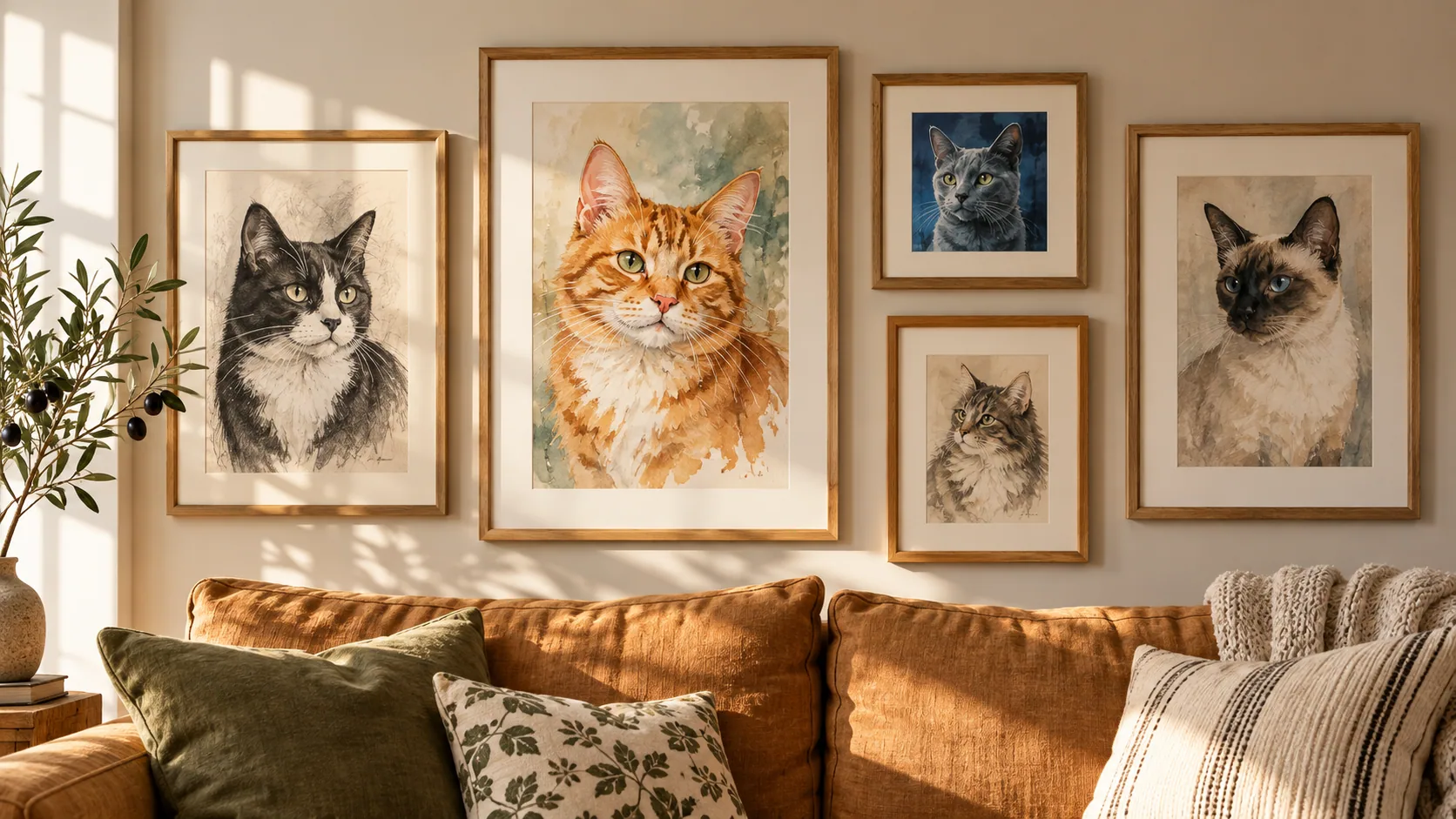

Display Art Without Frames: Choose by Paper and Mounting Method
Compare clips, ledges and display grids for unframed art. Protect valuable originals and check the mounting instructions for your exact wall and hardware.
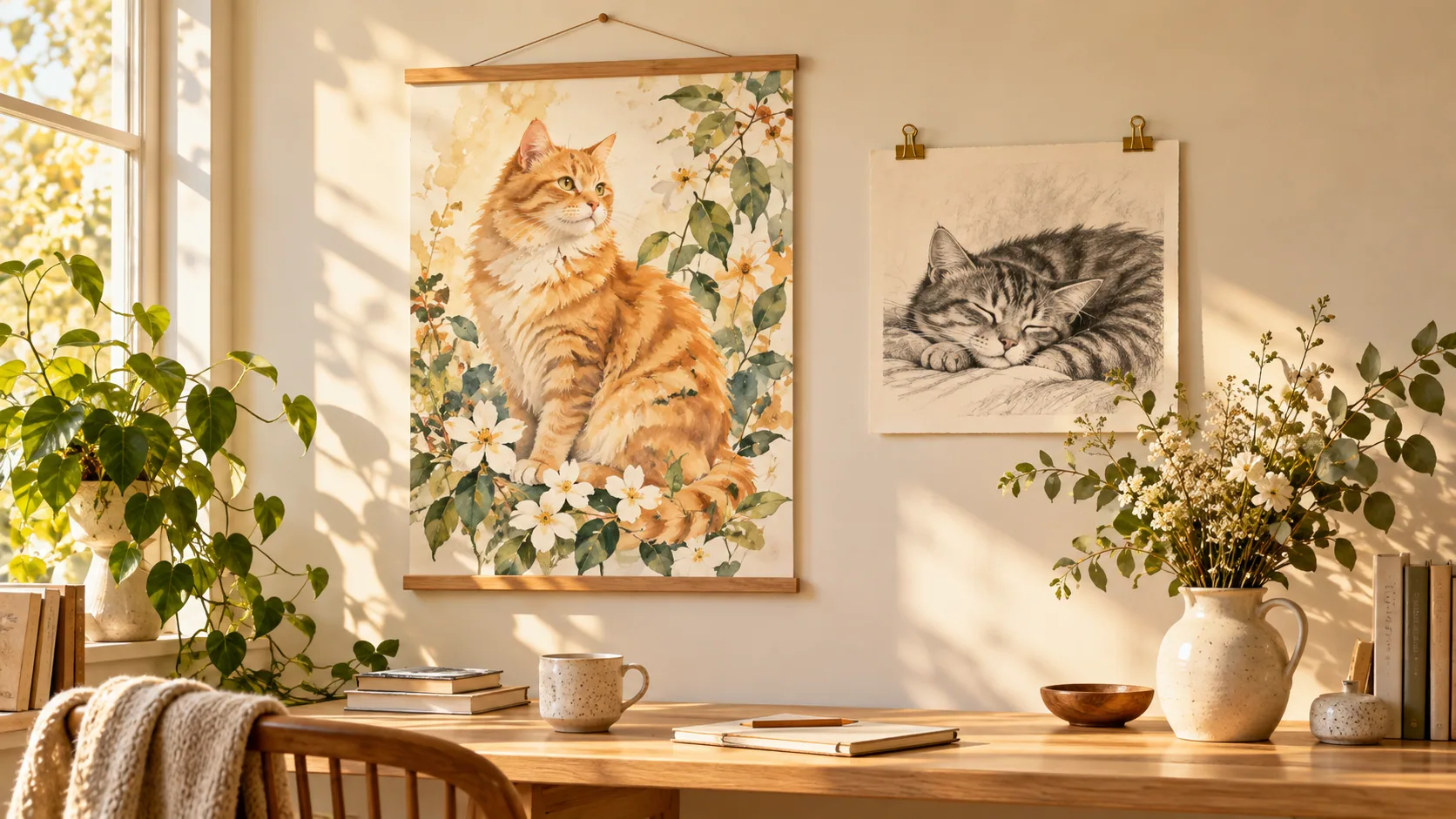
Table of Contents
Start by deciding whether the artwork is replaceable. A fresh print from a saved digital file can be used in a casual display; a unique family photograph needs more careful handling. The mounting method that suits a replaceable poster may leave pressure marks or adhesive residue on an original.
Match the method to the object
| Display | Useful for | Check before choosing |
|---|---|---|
| Clipboard or paper clip | Rotating inexpensive prints | Contact pressure and visible marks at the top edge |
| Wire grid with clips | A changing collection of small pictures | Grid mounting, clip pressure and nearby traffic |
| Ledge with a rigid backing | Leaning a supported print | Stability, slipping and protection from contact |
| Magnetic poster rails | A light poster with a compatible top edge | Grip, loaded weight and the manufacturer's hanging instructions |
These are planning options, not configurations we have load-tested. The hardware supplier Picture Hang Solutions describes several frameless display methods. Its examples help identify formats; your wall finish and exact product still determine installation requirements.
Use a copy for a frequently handled display
The Library of Congress photograph-care guidance advises avoiding adhesive and mechanical attachments on photographs and reducing unnecessary light exposure. That matters when a display involves tape, pins or clips.
For a treasured photograph, make a display copy and keep the original in suitable storage. Do not assume a product described as removable is appropriate for the image surface. A removable wall attachment and a photograph-safe mounting material solve different problems.
Plan the arrangement before installing hardware
Lay the prints on a table at their intended spacing. Check whether their top edges, centers or bottoms should align. A repeated gap often does more to organize mixed sizes than trying to force every picture into one size.
Keep the finished group clear of doors, direct handling and places where a cat could pull a hanging cord. Evaluate the whole assembly, including backing board and hardware, rather than judging by the paper's weight alone.
Follow the instructions for the exact product
Check approved wall materials, surface preparation, load limits, waiting periods and removal steps on the current packaging or manufacturer's page. Do not combine a load rating from one strip with installation advice for another model. If the instructions exclude your wall finish, choose a different attachment.
After installation, inspect the display for slipping, curling or movement. A photograph of a neat arrangement cannot establish the long-term behavior of a fastener. For a large or irreplaceable work, seek suitable framing or installation advice before improvising a mounting method.
Cat portrait tutorials, creative gift ideas, and new styles from the Frameow team.