
Pattern Cat Art Lesson: An Original Worksheet and Three Repeats
Use an original cat worksheet to practice dots, stripes and waves. Keep the face quiet, vary pattern spacing and compare two body sections.
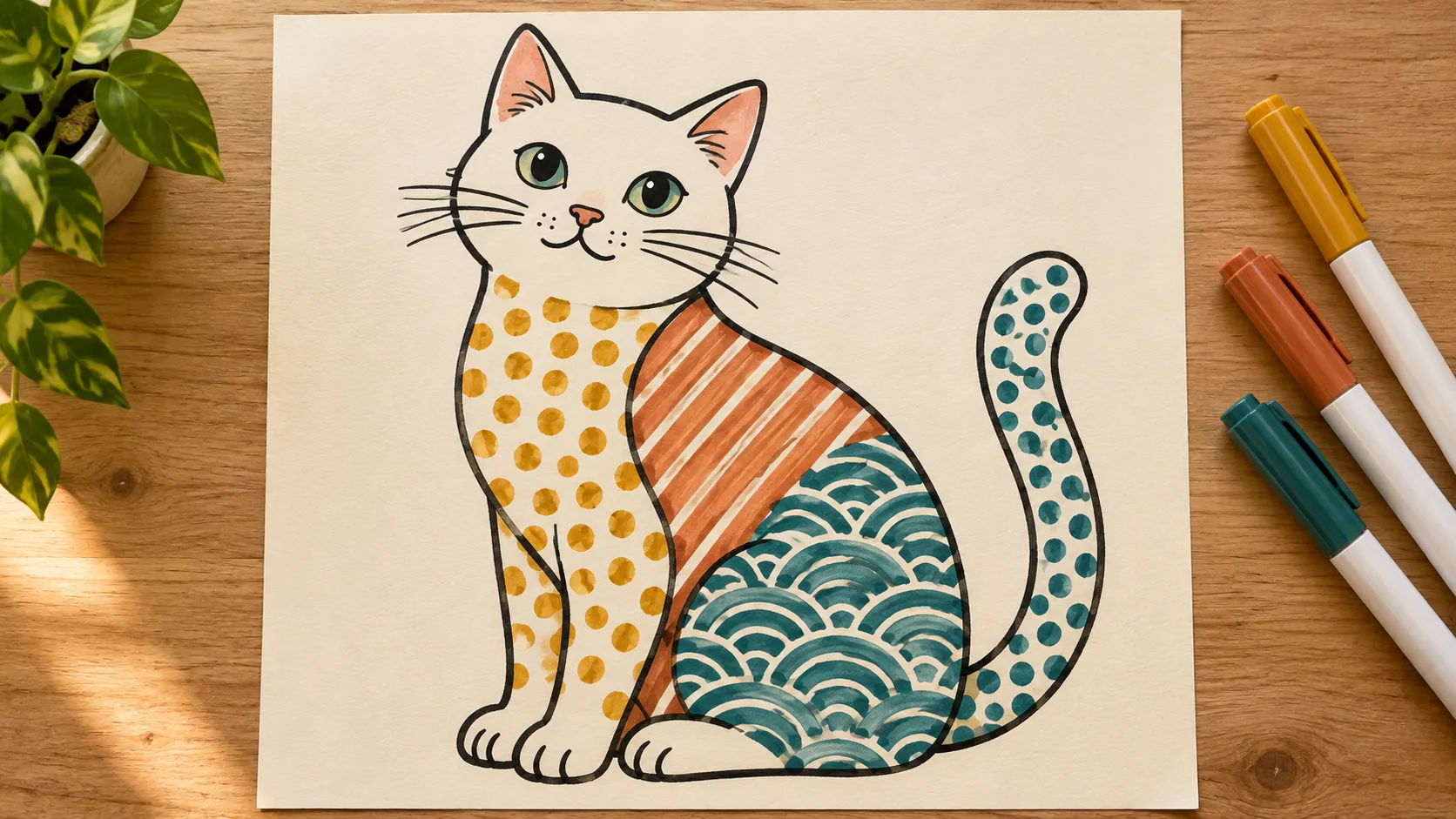
Table of Contents
This pattern exercise asks students to make a few marks repeat deliberately. The goal is to notice spacing, direction and contrast, not to fill every inch of the cat as quickly as possible.
Download the original pattern-cat worksheet. It has broad body sections and a quiet face area. Personal and classroom use is permitted under the file license.
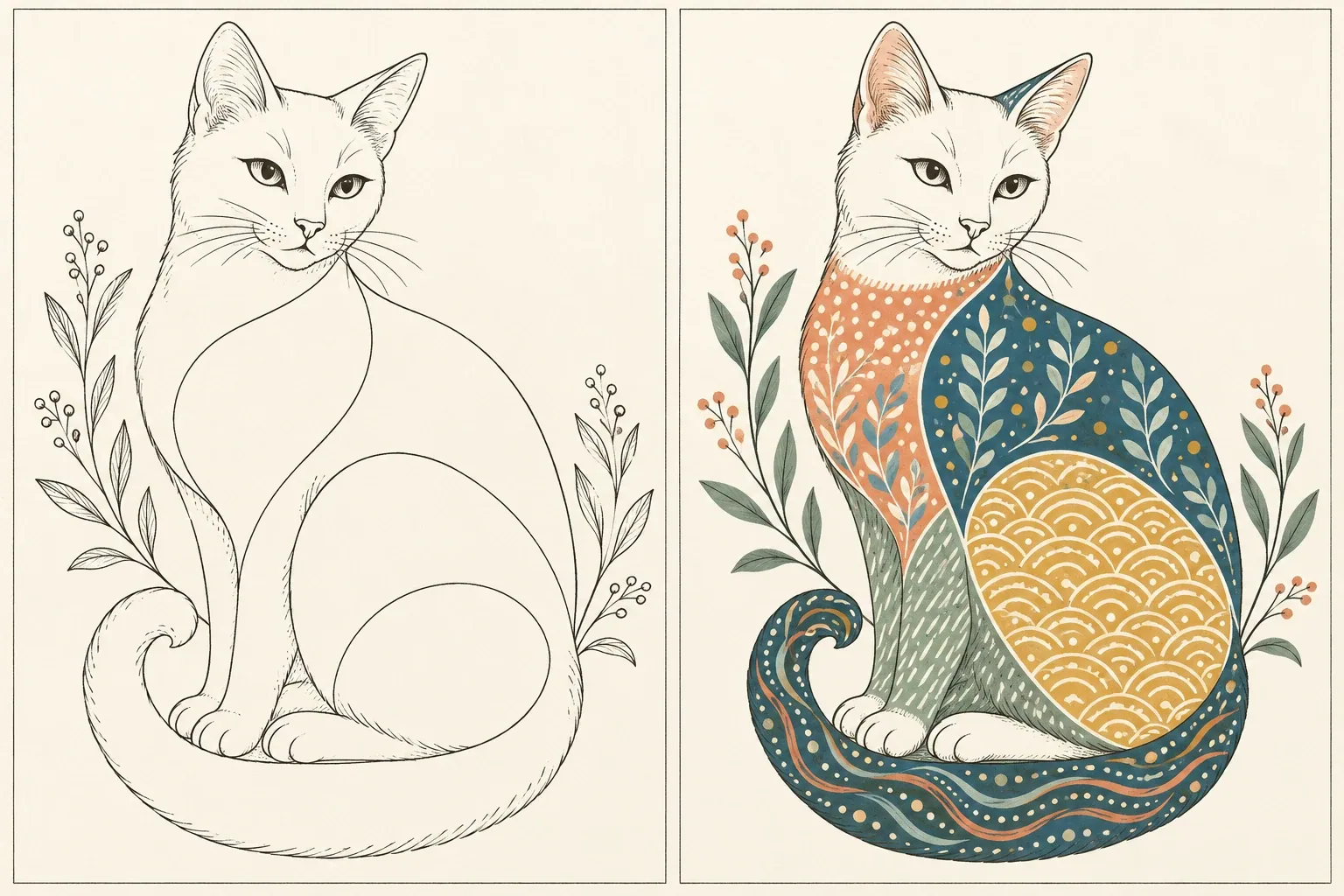
AI-generated visual reference; a PNG illustration, not a physical demonstration or editable vector template.
Begin with three small pattern samples
On scrap paper, practice dots, short stripes and waves. Repeat each mark across a small box. Then change just one thing: double the spacing, turn the stripes or alternate large and small dots.
Ask students to describe the rule they used. “Small dot, large dot, repeat” is an observable pattern; “make it pretty” gives them less to work with.
Give each body section a job
Choose one repeat for each section. Keep the marks large enough to be visible from normal viewing distance. A dense section can sit beside a quieter section so the eye has somewhere to rest.
Leave the face mostly clear initially. Add a small number of facial features after the body patterns are established. If the face disappears, remove or simplify nearby marks rather than adding more outlines everywhere.
Compare before coloring
Put two sections beside each other and ask which is visually darker. Closely packed marks may read as a darker area even when they use the same pen. This makes a useful observation without introducing a complicated color scheme.
For color, choose a small palette and repeat a color in more than one place. Students can explain whether they used color to connect sections or distinguish them. There is no need for every student to use the same choices.
Adapt the task to the group
For students who find the whole sheet tiring, complete two sections and leave the rest open. For an extension, ask students to invent a repeat that can continue without a visible restart. A larger print gives more space for broad marks; verify the printer's fit setting before class.
Teacher Patty Palmer's line-drawing lesson at Deep Space Sparkle is a source for using simple animal shapes and patterned subdivisions. Our visual study is independently generated, not a copy of that site's download or a reproduction of an artist's work.
This is a proposed classroom exercise, not a report from a lesson we have taught. Test the print size and materials with your group, and adjust the number of sections and expected time to their needs. Do not label the result as a specific artist's work or a historical art movement merely because it uses bright colors and repeated shapes.
Describe the activity by what students actually do
This exercise combines repeated marks inside a cat outline. Call it a pattern or line exercise. Bright colors and a stylized animal do not, by themselves, make a lesson a documented study of Expressionism or of any named artist.
If you later add an artist study, identify a specific work from a reliable collection source, explain what students will observe and create an independent response. Keep the source image's reproduction terms separate from permission to use this original worksheet.
Cat portrait tutorials, creative gift ideas, and new styles from the Frameow team.