
Draw a Bouncy Cat Character With Curved Limbs
Practice an original cartoon cat with simple body masses, curved limbs and a readable silhouette. Download the three-stage drawing sheet.
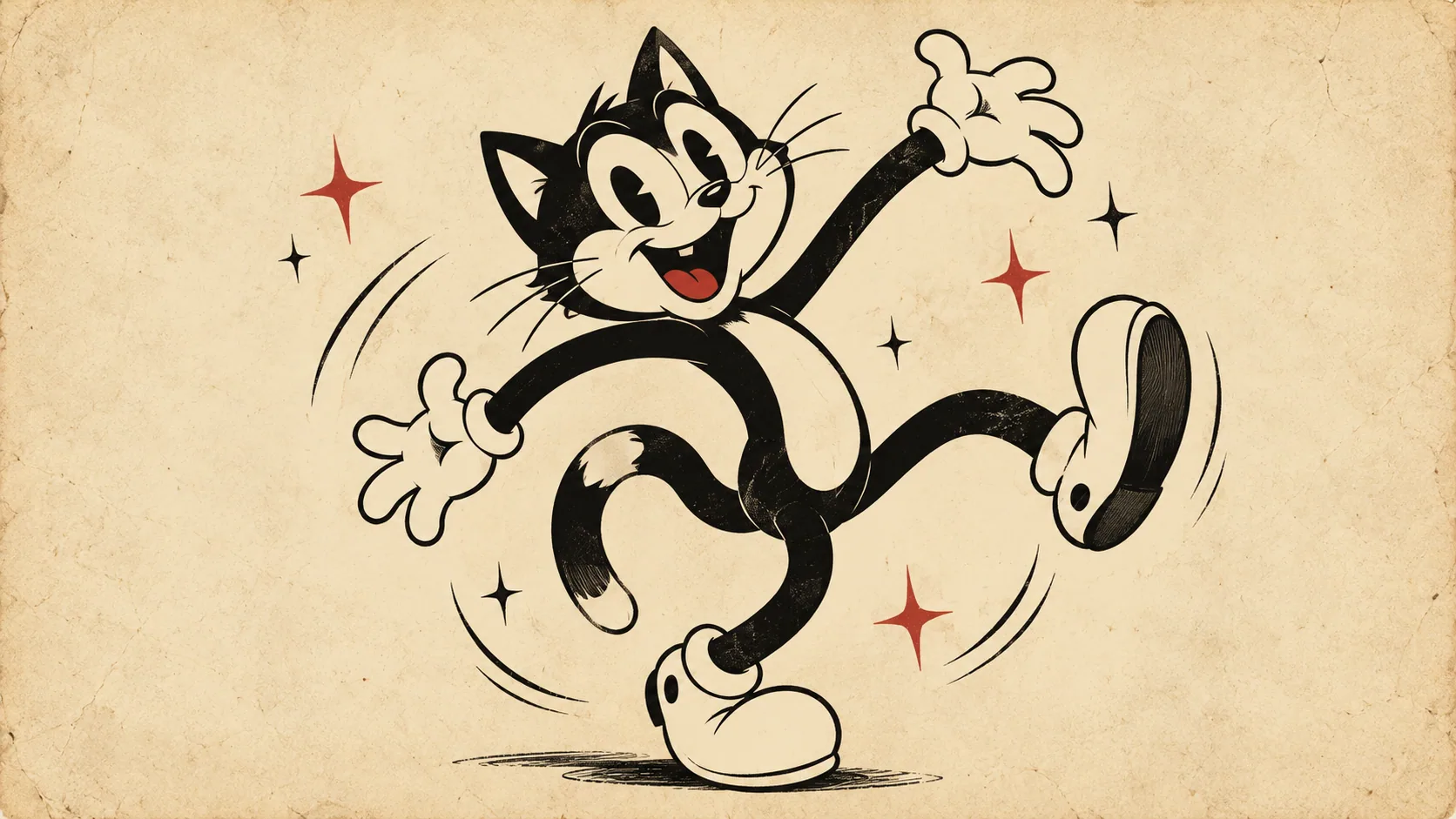
Table of Contents
For this flexible-limb cartoon exercise, use large body shapes and smooth arm curves before drawing small facial details. The aim is a lively, readable pose. It is not a reconstruction of a particular studio character or an animation-history lesson.
Download the original construction sheet. The three panels show light construction, clean ink contours and finished color. Use the construction view to study body masses and limb curves before adding details.
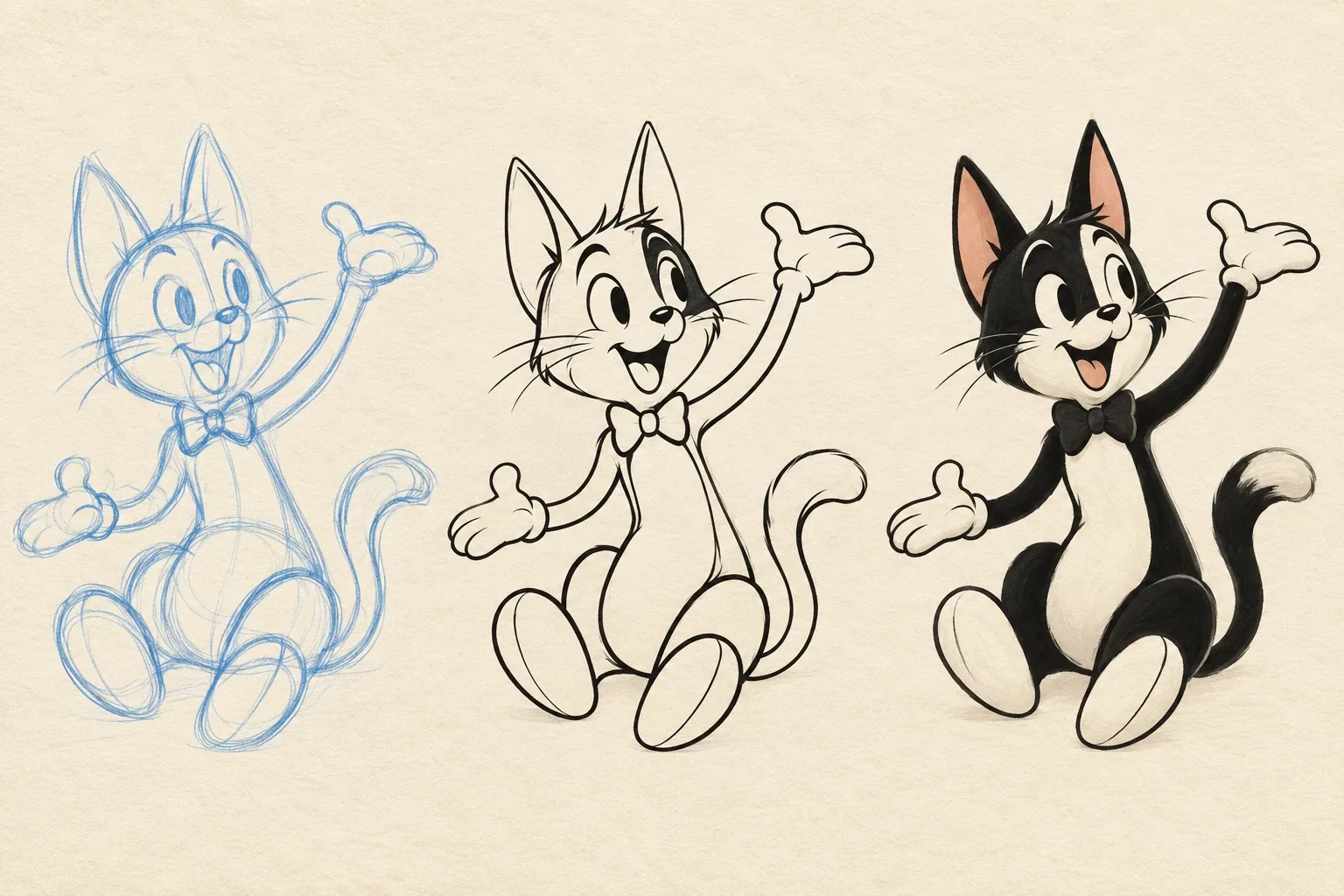
AI-generated visual reference; a PNG illustration, not a physical demonstration or editable vector template.
Build a stable body
Draw a rounded head above a rounded, slightly leaning torso. Add two ear triangles, then soften their junction with the head. Keep enough separation between the ears to read at thumbnail size.
Place the feet before the arms. In a grounded pose, decide which foot carries the weight; in a bouncing pose like this example, keep the direction of the raised feet consistent with the body’s gesture. Exaggerate the pose deliberately rather than losing track of its balance.
Draw limbs as paths, then give them width
Use one continuous curve for each arm. Put the hand at the end of the gesture, not in the middle of a tangle. Draw the second edge at a fairly consistent distance from the first, and round the connection into the body.
In the worksheet, the arms bend in different directions. This breaks the symmetry while keeping both hands outside the face. If a hand overlaps the cheek, move the whole arm curve rather than shrinking the hand until it becomes unreadable.
Let the pose carry the joke
Try reaching for an imaginary warm mug, conducting a quiet orchestra or presenting a very important empty bowl. Each action gives the arms a destination.
Keep props simple. A bowl needs a rim and a base, not a detailed pattern. The viewer should recognize the gesture before noticing the accessory.
Add a small face and check the silhouette
Place the eyes on the same construction line. Keep the nose and mouth clear of the outer contour. Then reduce the drawing to about the size it will appear on a card or avatar.
If the pose becomes a knot of shapes, widen the gap between arm and body. If the character looks stiff, adjust the main body tilt before adding more curves to the fingers. If it no longer reads as a cat, revisit the ear spacing, muzzle and tail.
This worksheet is an original construction exercise. When making your own character, develop its proportions and face from your own references instead of copying a familiar film or game mascot. A polished drawing can still be recognizably yours without relying on another character's costume and signature features.
Cat portrait tutorials, creative gift ideas, and new styles from the Frameow team.