
Cat Photo Ideas to Try at Home
Find cat photo ideas for windowsills, quiet moments and playful scenes, with simple setups, lighting notes and alternatives for camera-shy cats.
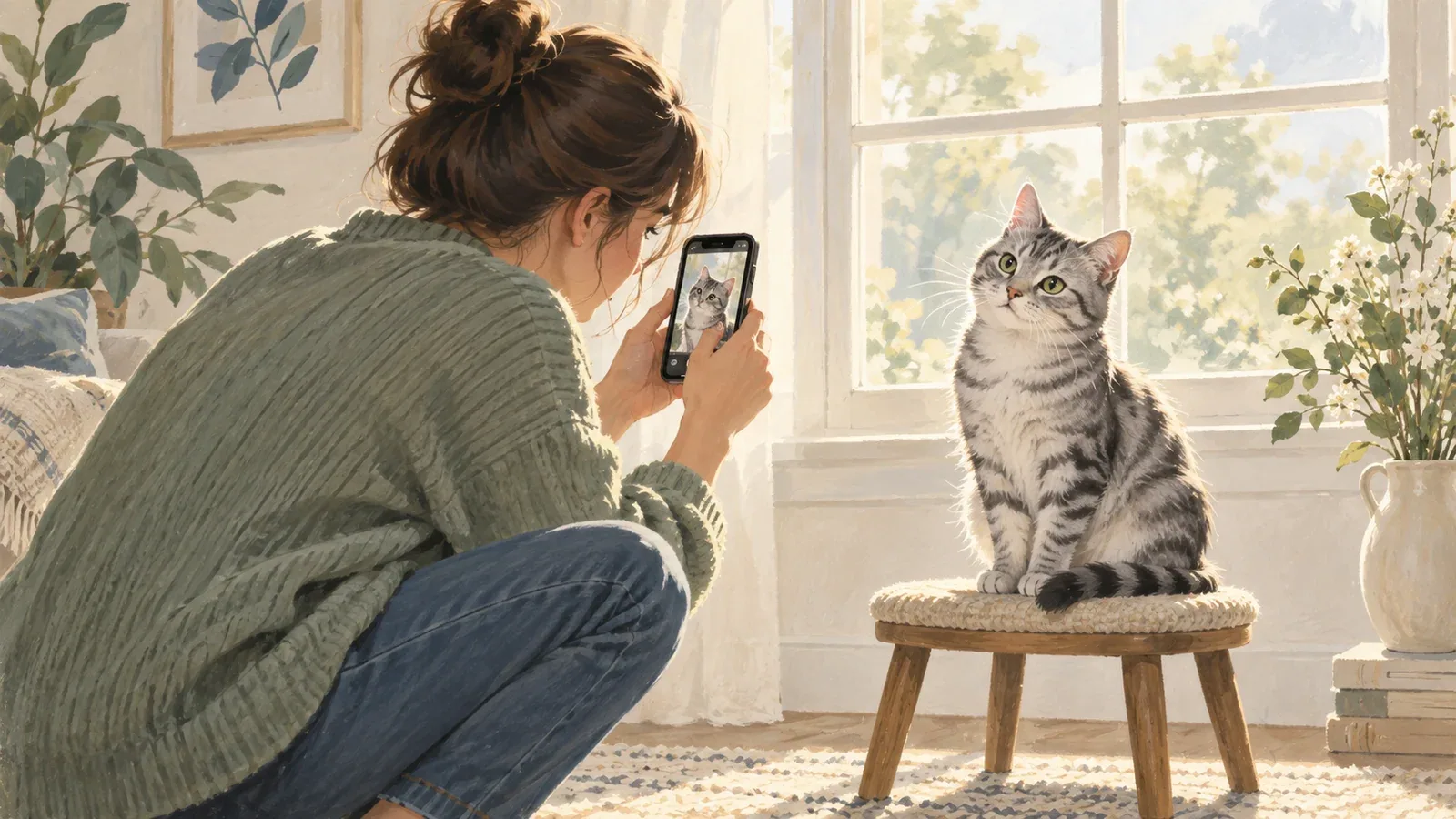
Table of Contents
Good cat photo ideas start with something your cat already enjoys doing. A favorite window, a familiar box or the pause before a nap gives you a scene without requiring a costume or a forced pose. Choose one setup, watch the light, and let the cat decide how long the session lasts.
Seven scenes to try at home
| Scene | Where to put the camera | Light to look for | If the cat does something else |
|---|---|---|---|
| Window-side portrait | At eye level, facing the lit side of the face | Soft daylight from in front or one side | Photograph the profile instead |
| Favorite sleeping place | Beside the bed, without leaning over the cat | Gentle room light with some detail in the fur | Make a picture of the empty spot and a separate awake portrait |
| Cardboard-box lookout | Low enough to include the box rim | Light reaching the eyes above the rim | Photograph the paws or the investigation of the box |
| Doorway observer | Across the room at a low angle | Light from the room the cat faces | Leave more space and capture the whole scene |
| Playtime pause | Away from the toy's path | Enough light to limit motion blur | Wait for the pause after the chase |
| Tiny familiar detail | Close enough for a paw, ear or whisker view | Light across the detail | Take a wider image and crop a copy later |
| Portrait with a person | At a comfortable distance from both faces | Similar light on the person and cat | Photograph them sitting near each other without holding |
These are setup suggestions, not photographs from a completed test session. You can adapt each one to the space and light in your home.
Make a window portrait without a silhouette
Stand with the window behind or beside you so light reaches the face. If you point straight toward the window, the camera may preserve the bright outdoors while leaving the cat very dark. Move around the cat and compare the face rather than trying to correct everything with editing.
Take a vertical image with both ears and the chest, then a horizontal image that includes the room. The first may work as a portrait reference; the second explains where the moment happened. You do not have to make one photo serve both purposes.
Tell a small story with three photographs
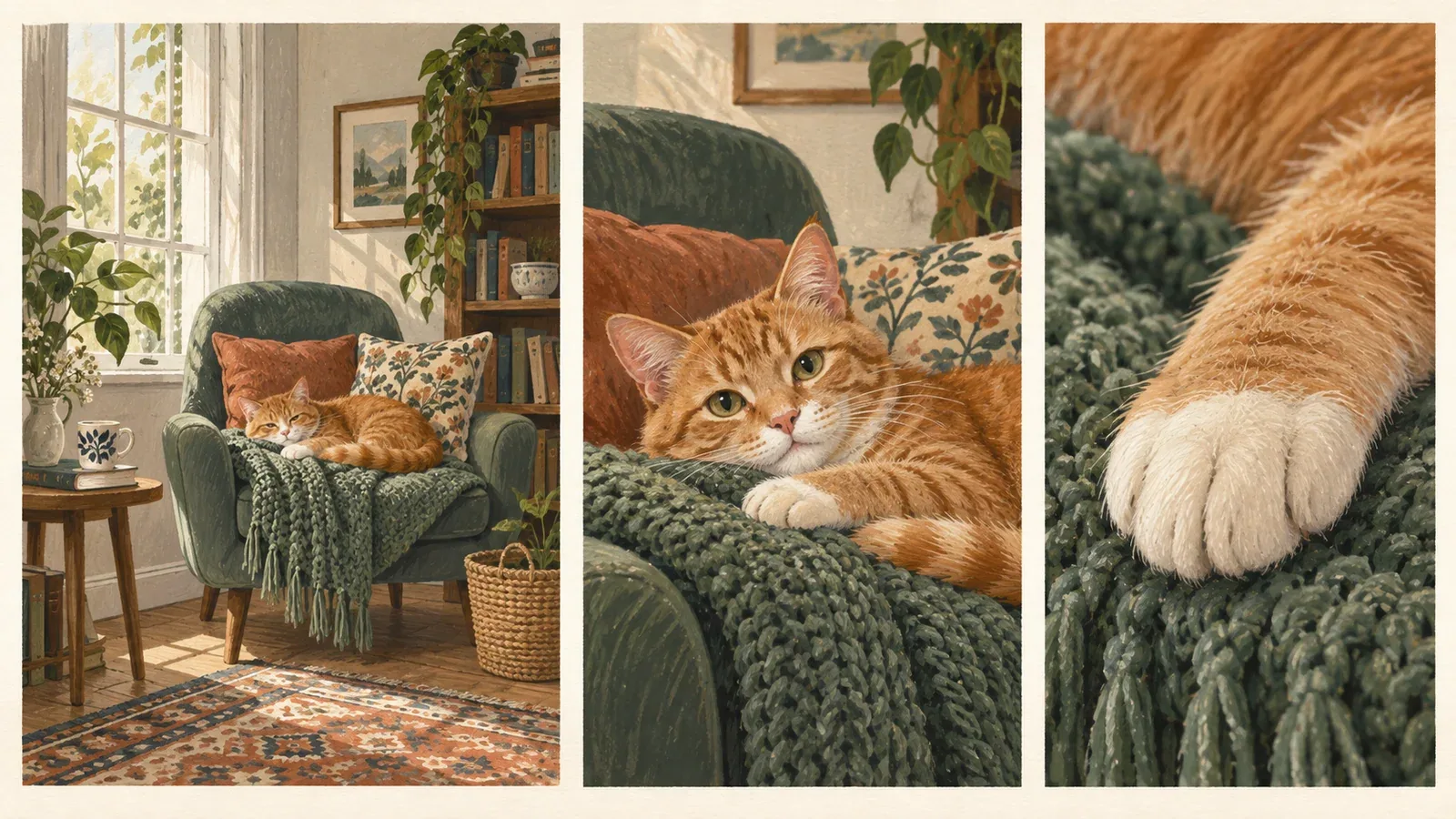
AI-generated storyboard: a wide view, a closer expression and a small detail can tell one story.
A three-picture sequence is more personal than several almost identical headshots. Try place, action, detail:
- The place: the box beside the sofa.
- The action: your cat investigating its opening.
- The detail: one paw hooked over the edge.
Keep the colors and lighting reasonably consistent, but do not interrupt the moment to make the frames match perfectly. Add a short caption with the habit you want to remember. A sequence like this can become a simple digital gift or an album page later.
Photograph play without chasing the cat
Decide where you can sit safely before play starts. Keep the lens clear and leave room around the moving cat. A brief burst may capture a useful pause, but it also creates many blurred or nearly identical files, so review and select afterward.
If the toy moves toward you, be ready for the cat to leave the focus area. Wider framing gives you some space to crop. Do not put your camera or a hand where the cat is about to land.
If the action photographs do not work, switch to a portrait during a rest. You still get the expression and the context without needing a spectacular midair image.
Use a birthday idea without dressing the cat
Photograph the cat normally, then add the birthday message to a separate card or layout. A paper sign can stand in the background beyond the cat's reach, or the text can be added afterward in an editor. This keeps the photo session familiar and gives you control over spelling and placement.
Choose a favorite toy or bed as the recognizable prop. Avoid relying on food, plants or decorations you have not checked for use around your cat. You do not need props at all for a birthday portrait; a date and a specific memory can make an ordinary photo meaningful.
Finish with a short selection pass
Open the photos large enough to inspect the eyes. Remove obvious duplicates, then keep a mixture: one face, one scene and one detail. Save the originals before making crops or color changes.
Alley Cat Allies' photography guidance emphasizes patience, varied viewpoints and clear original files. For a portrait reference, favor visible markings and an unobstructed face. For an album, let the quieter and funnier pictures stay too.
If you want a digital illustration afterward, choose a portrait style around a feature you recognize in the photograph. The photograph is already a finished memory; turning it into artwork is an optional next step.
Make the Halloween theme in the card, not on the cat
Use an ordinary comfortable photo and add a seasonal palette outside the image. The local poster editor has a pumpkin-orange palette; try a heading such as “Midnight Visitor” with a short caption about a real habit. The photograph is fitted whole, so decorations need not cover the face.
This produces a digital card-like poster from an existing picture. It is not a photographed Halloween set, a costume test or a promise that Frameow accepts arbitrary seasonal prompts. Save the editable SVG if you want to change the occasion later.
Cat portrait tutorials, creative gift ideas, and new styles from the Frameow team.